A Comparison of Invisalign® vs. Braces
Considering Invisalign®? Modern-day dentistry has allowed for the evolution of many types of teeth straightening options. Clear aligners are offered by a number of brands, with Invisalign® being the most popular. However, individuals who are considering teeth straightening may also consider braces, which are known to be the standard method for correcting crooked teeth, crowded teeth, and gaps between teeth. Both Invisalign® and braces can effectively straighten the teeth; however, each has its own advantages and downsides. Ready to find out more?
Understanding Invisalign® and how it compares to traditional braces
Below is a quick overview of both Invisalign® and traditional braces, including what they are and the major differences between them. This information can be quite helpful to someone trying to decide which teeth straightening option is most suitable for them.
What is Invisalign?
Invisalign® is a brand of clear aligners that offers treatment for patients looking to straighten their teeth. An entire series of clear aligners is custom-created at the start of treatment. Patients will change out their aligners every six to eight weeks, depending on their progress.
Invisalign® aligners are clear, removable, and very comfortable. The aligners can be used for the top, bottom, or both arches of teeth. Because the aligners are removable, it is important to understand that discipline is required. Aligners are to be worn for a minimum of 22 hours a day to ensure maximum results. Wear that is less than 22 hours a day can lead to delayed treatment times and skewed results, both of which can lead to the need for further treatment.
With Invisalign®, oral hygiene does not change much, which means routine brushing and flossing must be continued. However, what is important to know is that oral hygiene should be amped up when undergoing teeth straightening treatment with clear aligners. Because they are not to be worn while eating, it is ideal to brush and rinse immediately afterward and before re-inserting the aligners. This ensures that food does not get left behind, which can lead to bacterial growth.
Traditional braces
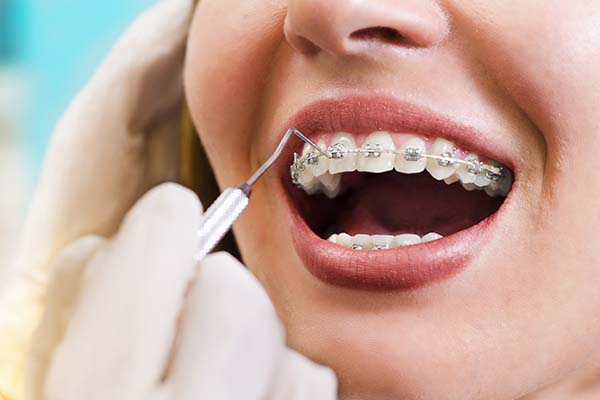
Braces are offered in three different options: metal, ceramic, and lingual. Metal and ceramic braces are similar in that brackets are cemented onto the front of the teeth, with wires feeding through each bracket. However, metal braces are gray or silver in color, which can draw attention to the mouth. Ceramic braces are made up of white brackets and clear wires, thus making them less noticeable. Lingual braces are placed on the inner side of the teeth, making them almost impossible to see; however, these are relatively rare and not suitable for everyone.
Over the course of braces treatment, patients will visit the dentist every six to eight weeks for adjustments. Wires are tightened to ensure that they are matching the progression of the teeth as they shift.
There tends to be more discomfort associated with any type of braces as the wires and brackets can irritate the soft tissues of the mouth. Additionally, the adjustments involve tightening the wires, which can put a lot of pressure on the teeth as they are shifting. With Invisalign®, the teeth shift together, as opposed to individually. This puts less stress on each individual tooth, resulting in less discomfort and soreness. Of course, there will be some slight discomfort from time to time; however, it will not be comparable to that of braces.
What to know about teeth straightening
Both Invisalign® and traditional braces offer patients the same goal, which is to straighten teeth that are crooked, crowded, or protruding. However, one difference is that braces can address a number of orthodontic issues, including the ones listed above, as well as bite correction and jaw malfunction treatment. Invisalign® is used more for actual teeth straightening, with mild to moderate issues responding the best to this type of treatment.
In some cases, a general dentist may recommend braces for a few months and then Invisalign® to complete the treatment process. This gets the major shifting out of the way first and then allows for the shift to continue but in a more comfortable fashion.
Ready for a straighter, healthier smile?
When looking for further information on Invisalign or traditional braces, it is best to consult directly with a general dentist. Any questions or concerns about either treatment option can be addressed appropriately. Reach out today to find out more or to get scheduled for a consultation appointment.
Request an appointment here: https://paramountdentalspecialty.com or call Paramount Dental Care & Specialty at (562) 450-1261 for an appointment in our Long Beach office.
Check out what others are saying about our dental services on Yelp: Braces in Long Beach, CA.
Related Posts
Unlike other body organs, your teeth cannot regenerate when damaged. Therefore, you will need to repair the teeth with synthetic materials to have a full-functioning smile. Here are some tips from a family dentist to help maintain proper oral care to preserve the only set of natural teeth you will ever have.Brushing removes plaque, a…
A family dentist is a type of dental practitioner who provides numerous services to patients of all ages. This type of dentist is specially trained to treat children, adults, and seniors and can help with various dental issues, from routine cleanings to complex restorative procedures. This blog post will discuss the types of services offered…
Keeping your appointments with your family dentist can help keep your mouth healthy. This dental health professional knows how to relax and calm patients of every age. Knowing your dentist’s abilities can give you peace of mind that you are in good hands. Here are the details on how your family dentist can improve your…
A family dentist is much like a general dentist, providing quality primary dental care for patients. Their educational backgrounds and services are similar. So, how do you decide which professional is right? This article will examine both professionals and explore the key difference that sets them apart.Both family and general dentists act as primary dental…