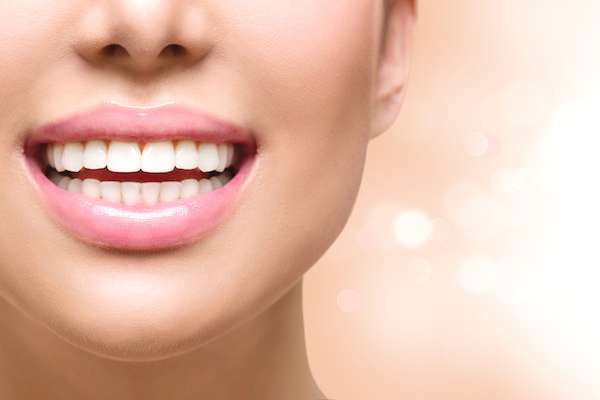
There are some cases where a stained or chipped tooth can be fixed with dental bonding or contouring. While these issues can be more severe and so require a different solution, something like an uneven edge or unsightly spot can often be treated without more invasive procedures that can affect the entire mouth.
Dental bonding
This procedure enhances a tooth's appearance by adding a small amount of material to it.
Material used
Composite resin is typically the material used to fill in irregularities in a tooth. This is the same compound generally used to fill more visible cavities because it is similar in color to the natural enamel of the tooth. It can even be shaded to match the color of a tooth so the bonding is not noticeable. A treatment like this can last between 5 and 10 years depending on care.
Issues it can fix
More serious irregularities may not be able to be repaired by bonding. The following are some of the issues commonly fixed by this type of procedure:
- Small gaps between teeth
- Intense stains unable to be lifted with other whitening options
- A tooth that appears short or uneven
- Chipped teeth
- As an alternative to a crown on a front tooth
This treatment can typically be completed in a single office visit and without the use of any numbing agents. It is important to keep the teeth as clean as possible after having this procedure, as the bonded area will not discolor along with the natural enamel. Regular brushing and oral hygiene is therefore important. In some cases, tooth whitening may be necessary to keep the surrounding teeth the same color as the bonding.
Dental contouring
Instead of adding material to a tooth, this procedure takes away a small amount of enamel.
Tools used
A sanding instrument is most often used to correct small imperfections on the enamel of a tooth. When the irregularity is on the side of a tooth, contouring can be accomplished using sandpaper-like strips. The issue needs to be on the surface of the tooth and not down too deep for this treatment to be a recommended option.
Smile problems it can solve
Contouring can only be performed on thick enamel. Attempting to contour thin enamel can cause chipping or cracking. A procedure like this can successfully deal with pits or rough patches, pointed or jagged edges, teeth that overlap or longer teeth that create an uneven smile.
While this treatment can be completed in a dental office, the strength of your enamel should be thoroughly checked by a dental professional before beginning the procedure. This can prevent thin enamel from being damaged unnecessarily.
Check out what others are saying about our dental services on Yelp: Dental Bonding in Long Beach, CA.
Conclusion
Teeth with small surface imperfections may be able to be fixed with dental bonding and contouring. These relatively simple procedures involve adding material or shaving off small amounts of enamel. Many common tooth issues can be addressed quickly and easily with these treatments.
Request an appointment or call Paramount Dental Care & Specialty at 562-450-1261 for an appointment in our Long Beach office.
Related Posts
Family dentists are uniquely qualified to offer various dental services to patients of all ages. Children, teens, and adults can visit the dentist for teeth cleanings, checkups, cavity fillings, and other restorative dental procedures. This article will examine the qualifications of family dentists to help you find the right one for your family’s oral health.Becoming…
Tooth loss can affect how you eat and speak, as well as how your smile looks. Restorative solutions, like implant crowns, are important for maintaining your dental and overall health. Implant crowns are strong and resemble natural teeth, blending well with surrounding teeth. They imitate the structure of real teeth, providing long-term benefits for those…
Unlike other body organs, your teeth cannot regenerate when damaged. Therefore, you will need to repair the teeth with synthetic materials to have a full-functioning smile. Here are some tips from a family dentist to help maintain proper oral care to preserve the only set of natural teeth you will ever have.Brushing removes plaque, a…