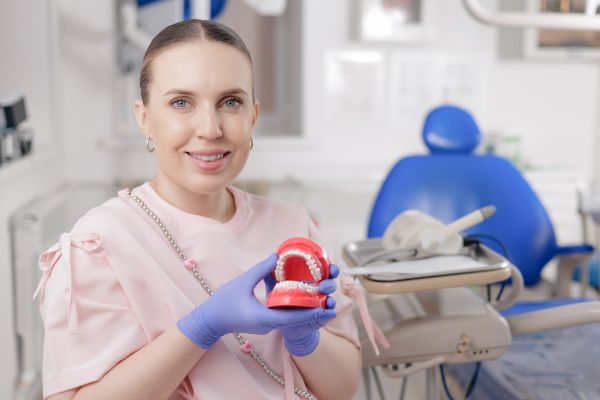
An orthodontist can spot early signs of bite and alignment problems before they become harder to correct later. Many parents think orthodontic care begins only after all the permanent teeth have appeared, but an earlier visit often provides families with useful information about how a child’s smile is developing. Teeth, jaws, and facial structures all change quickly during childhood, and those changes can affect the way the bite comes together. When an orthodontist checks growth at the right stage, a child has a better chance of receiving care at the most helpful time.
When and why should a child see an orthodontist?
The American Association of Orthodontists recommends scheduling an orthodontic evaluation around age seven. A child does not need to have all permanent teeth in place before seeing an orthodontist. In fact, these early orthodontic visits are meant to help identify developing concerns while the teeth, jaws, and bite are still changing.
What an orthodontist looks for in developing mouths
An early orthodontic exam can uncover concerns that may not be obvious at home. During this visit, an orthodontist evaluates the way the teeth are erupting, how the bite fits together, and whether the jaws appear to be developing in a healthy pattern. The mission is to understand how the entire mouth is growing and whether anything may interfere with normal development.
An orthodontist will also look for:
- Crowding that may reduce space for permanent teeth
- Bite concerns such as crossbite, overbite, underbite, or open bite
- Habits, like thumb sucking, that may affect jaw growth or tooth position
- Front teeth that appear more exposed to injury
- Crooked, gapped, or rotated teeth
These findings do not always mean a child needs treatment right away. Rather, they may simply show that the smile deserves closer monitoring as growth continues. That information can be helpful for families who want to stay ahead of potential problems rather than waiting for them to become more obvious.
Orthodontic treatments for children
Orthodontic treatment for children often falls into two general stages: phase one and phase two. Not every child needs both phases, and some children do not need early treatment at all. Nevertheless, when a bite problem, spacing issue, or jaw growth concern appears early, phased orthodontics can help guide development in a healthier direction.
The purpose of phased treatment is to address certain problems at the stage when treatment is most effective. Phase one happens while some baby teeth are still present and growth is active. Phase two usually begins after most or all permanent teeth have erupted; it focuses on refining the final bite and alignment. An orthodontist decides whether one phase, two phases, or simple monitoring makes the most sense based on the child’s needs.
Phase one orthodontics
Phase one orthodontics begins while a child still has a mix of baby teeth and permanent teeth. This stage focuses on problems that may benefit from treatment while the jaws are still growing. An orthodontist may recommend phase one treatment to help create room for incoming teeth, improve jaw alignment, or correct a bite issue that could become harder to manage later.
Severe crowding, crossbite, protruding front teeth, or jaw growth patterns that suggest future bite concerns are all common reasons for phase one orthodontics. An orthodontist may use limited braces or palatal expanders, depending on the child's specific orthodontic condition.
Phase two orthodontics
Phase two orthodontics begins once most or all of the permanent teeth have erupted. At this stage, the orthodontist focuses on refining the final alignment of the teeth and improving the bite so the smile looks and functions as well as possible. Thus, phase two often involves full braces or clear aligner-style orthodontic options, depending on the child’s age, bite, and treatment needs. This phase builds on the foundation created by growth and tooth eruption.
As mentioned, not all children need phased orthodontic treatment. When bite problems are projected to be mild or moderate, treatment can typically be delayed until all the permanent teeth have erupted. Then the orthodontist can straighten the teeth with a single treatment using teen braces or aligners. These treatments take one to two years on average.
Book an orthodontist visit for your child
Seeing an orthodontist early can give a child’s smile an important advantage. These visits help identify developing bite and alignment concerns, then determine when treatment, if any, would be easiest and most effective. Consult an orthodontist about your child's smile.
Request an appointment here: https://paramountdentalspecialty.com or call Paramount Dental Care & Specialty at (562) 450-1261 for an appointment in our Long Beach office.
Check out what others are saying about our dental services on Yelp: Orthodontist in Long Beach, CA.
Related Posts
Dental anxiety is common among children and adults. Thankfully, a family dentist has tools and techniques to help patients manage their anxiety while completing preventative and restorative dental work. This article will explore dental anxiety, how to manage it, and how to overcome it.Dental anxiety is when a patient feels fearful, stressed, or anxious about…
Wondering how to practice good oral hygiene? Read on for some helpful tips from a family dentist. Good oral hygiene is a cornerstone of overall health and wellness. Regular visits to a family dentist for checkups, cleanings, and instruction in excellent oral hygiene are essential to maintaining healthy teeth and gums.The family dentist is the…
A family dentist is an excellent choice for the entire family. If you are a parent, you know that the health of you, your children, and your partner are a top priority. Often, many parents do not schedule their dental appointments because scheduling conflicts with their children’s. This problem goes away when you find your…
You should consider seeing a family dentist if you have children. This allows your entire household to get their dental needs met at the same time instead of driving all over town to drop each member of your family off at their dentist.A family dentist is a general dentist who spends most of their time…